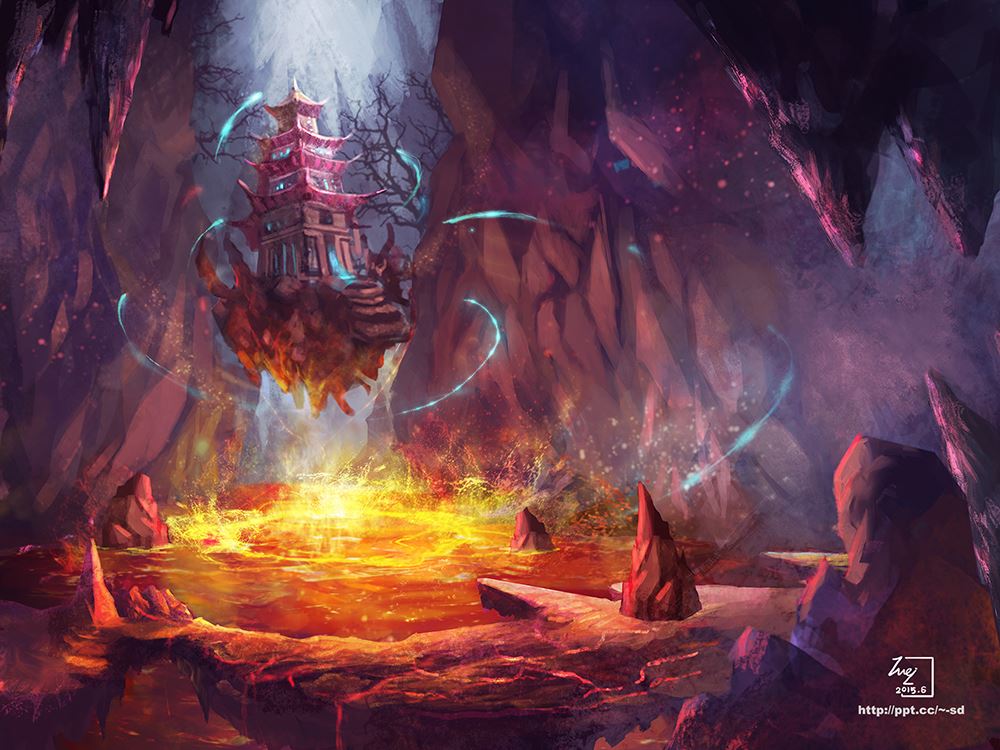
Four Key Communication Stages for Commission Art — Scene Edition
1. The line art stage
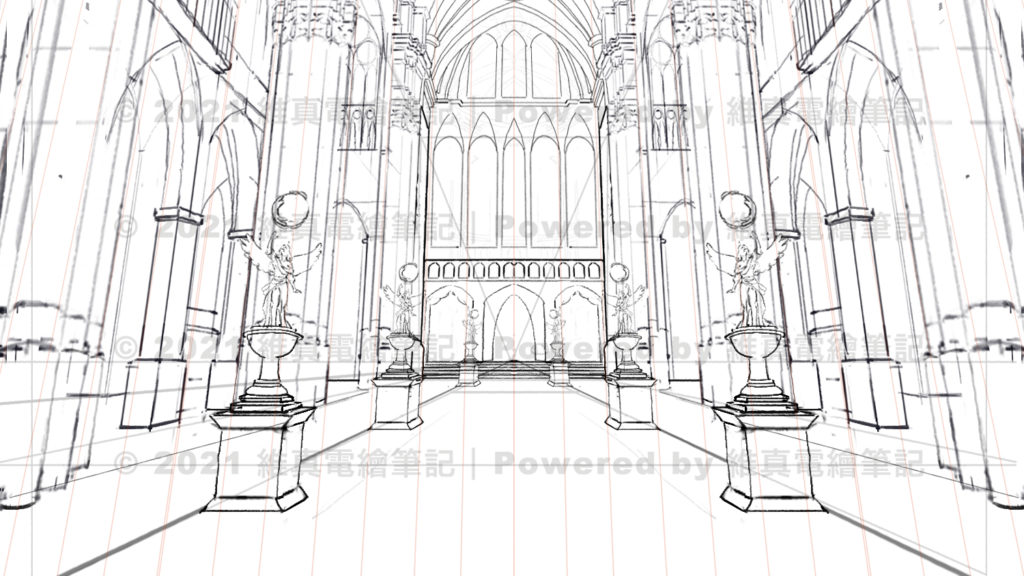
At the sketch stage, follow your own habits — start with line art or color blocks to show the client. The sketch's main job is to provide material for communication. To me, taking commissions is like going to work: what matters most is solving problems together with the client. So at this stage, I recommend prioritizing fully materializing the image in your head. When I took this commission, since it was fairly complex gothic architecture, I rendered the details to a minimal level even though it took longer — partly so the client could better see what the final would look like, and partly to make my own later coloring easier.
WeiChen painting note: "Sketches are the most direct way to communicate with clients" — it saves far more time than revising at the coloring stage.
2. Base colors
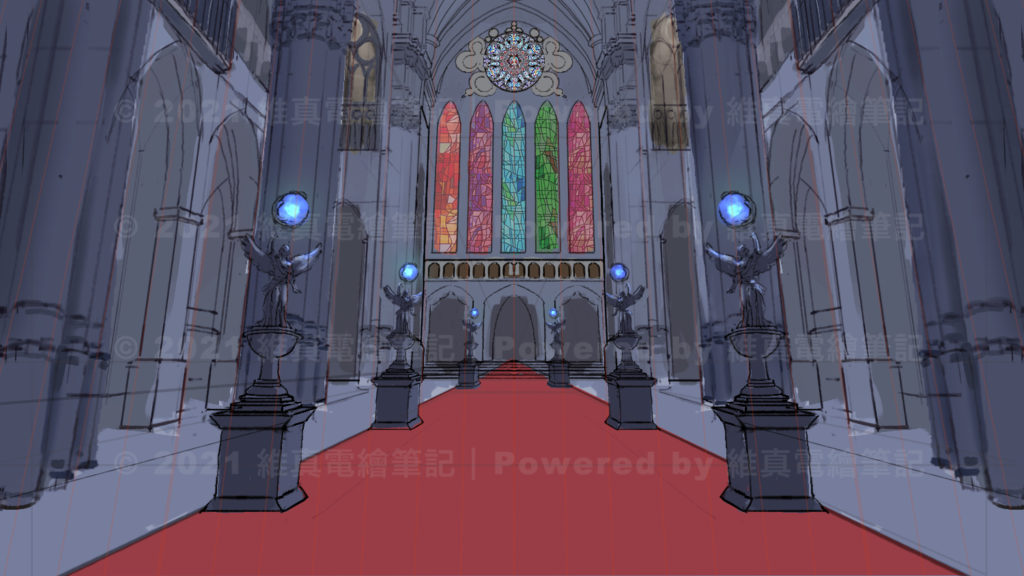
Lay the basic colors over the line art. At this stage I treat the image as having the "lights off" — light is removed from the scene entirely, so the client can review purely on the color scheme.
WeiChen painting note: "Review with the lights off" — step by step, let the client focus on the base colors!
3. Lighting: "Okay, lights on!"
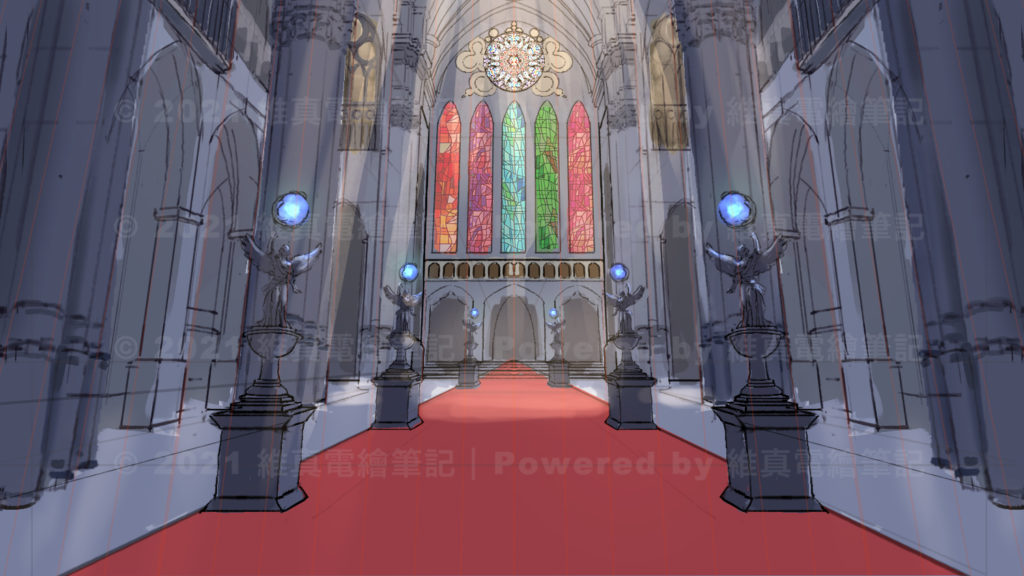
Open a new layer and start lighting. At this point I provide 2–3 lighting directions for the client to choose from. Interaction with the client matters enormously — even if their ideas differ from ours, the exchange of ideas pushes the work closer to what the client needs. After settling the light and adding one more light closer to the camera, below is the image after some further refinement.
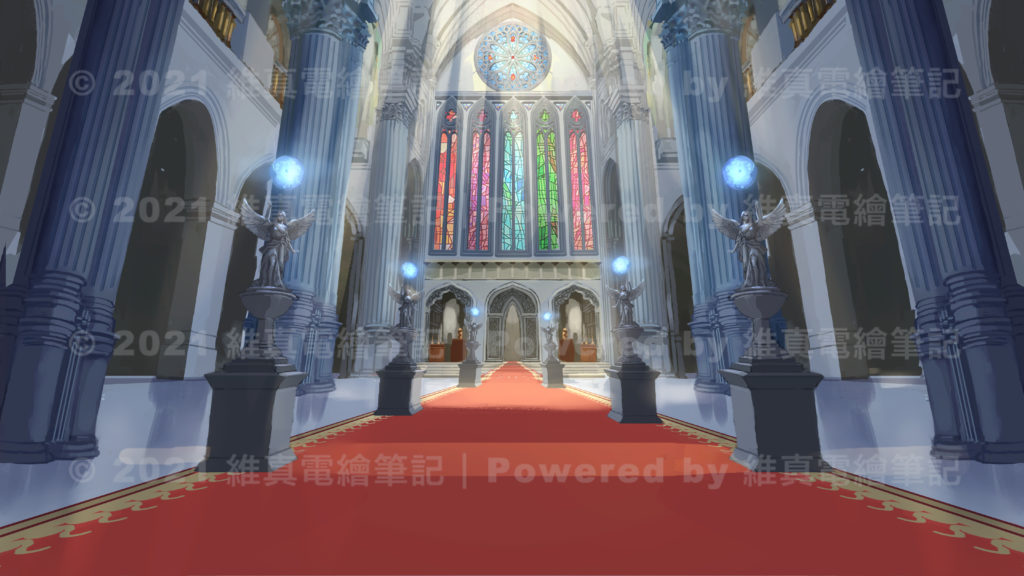
WeiChen painting note: Once base colors are confirmed, "turn the lights on for review and confirm the lighting."
4. Refine — Done!
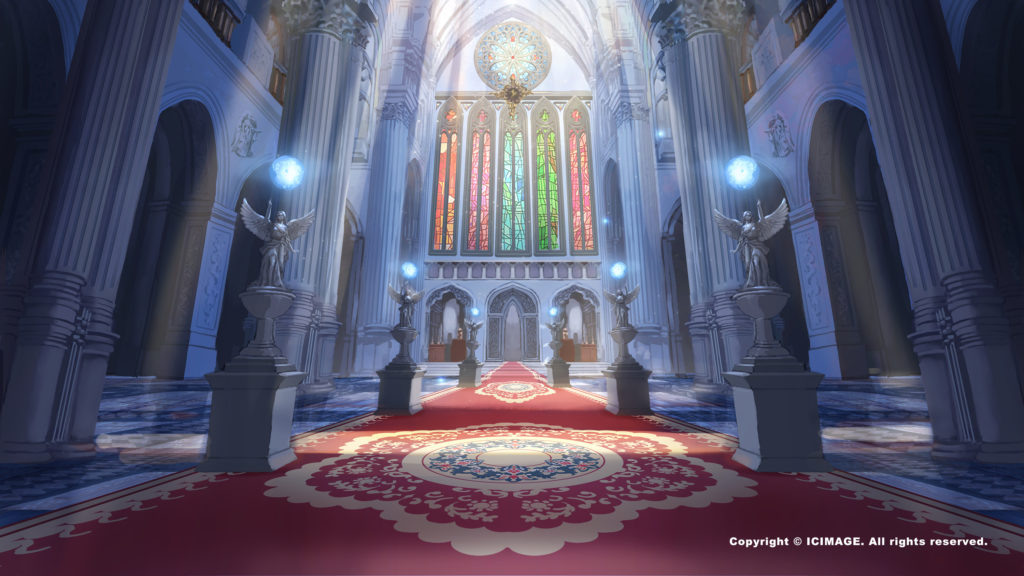
Refine along the client's chosen direction, and finish. Along the way the client may request additional details — floor patterns and the like. For any styles or placements to add, ask the client to explain in detail and to circle the areas they want refined, so you understand their needs precisely.
WeiChen painting note: When refining, use concrete methods to pin down exactly where and what the client wants refined — circled areas, reference images, and so on.
Summary
Whether it's a commercial character or scene commission, or personal work, creation is a continuous conversation — with yourself or with the client. Good sketches and good direction are what make a good final piece.
So for any commercial commission, three principles guide me:
1. Solving the client's needs comes first
2. Communication with the client must be open and healthy
3. Find the right way to communicate with each client
Taking commercial commissions is like holding a job — problems will come that need solving. When they do, approach them with a learner's mindset toward the working world; every client carries lessons we can learn from.
Finally, may your commissions go smoothly and your earnings pile up! :)
Wei Chang of WeiChen Studio 維真電繪筆記 has extensive drawing experience (film animation, game character and scene design, and more), has taught at colleges and universities, and has held lectures on multimedia and character and scene design. He hopes to use his own painting experience to help students grow their skills and help working professionals build a second specialty. WeiChen offers paid and free online courses, recommended to every companion on the digital painting road — we look forward to meeting you there!
Learn more about our digital painting courses About our professional art commissions Watch the free livestream onlinePopular Online Computer Graphics Courses
Overwatch Fanart Painting Process (Overwatch - D.va TT)
 By
Wei Chang
Enroll
By
Wei Chang
Enroll
Photoshop Painting Process - Sunshine Girl
By
Wei Chang
Enroll
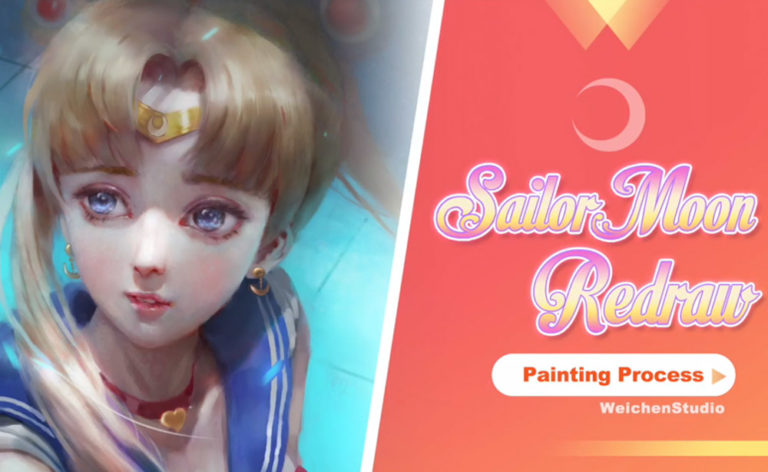
Sailor Moon Redraw Process
By
Wei Chang
Enroll
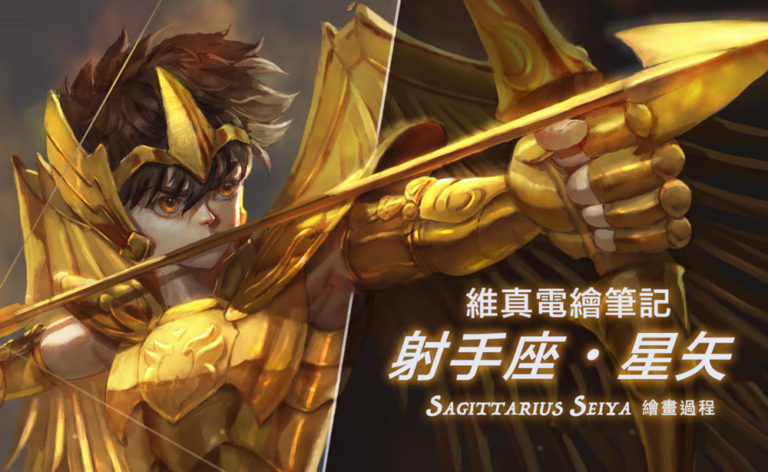
Digital Painting Time-Lapse: Sagittarius Seiya Painting Process
By
Wei Chang
Enroll
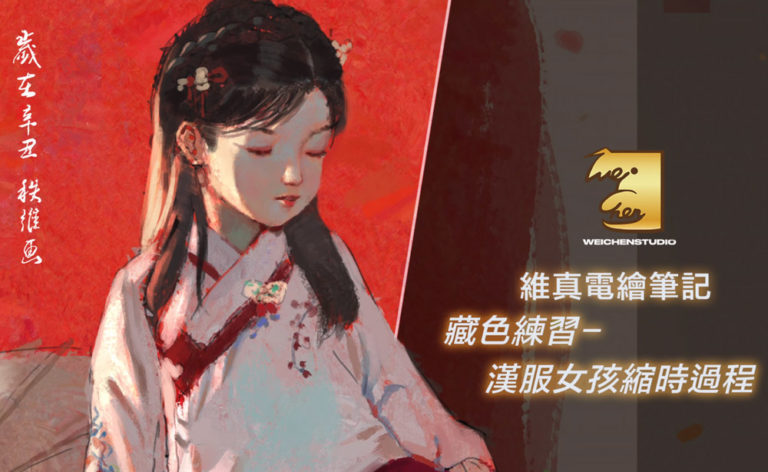
Time-Lapse: Hanfu Girl Practice Painting Process
By
Wei Chang
Enroll
Tablet Driver and Shortcut Setup (Huion Edition)
By
Wei Chang
Enroll

Ink-Style Characters
By
Wei Chang
NT$2,500
Add to cart
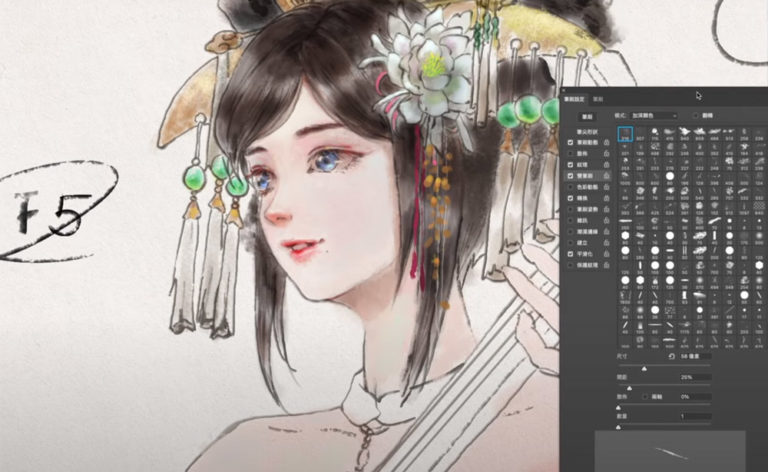
Photoshop Digital Painting Basics 2 - Making the Most of Tools: Brush Settings and Brush Modes
By
Wei Chang
Enroll

How to Learn Impasto Painting | Livestream Course Clip
By
Wei Chang
Enroll

What Commission Clients Taught Me | Livestream Course Clip
By
Wei Chang
Enroll