About Wei and Pearl
WeiChen Studio 維真工作室 is a professional illustration studio co-founded by Wei Chang and Pearl.
In Facebook's largest game art outsourcing group, "Game Art Design Outsourcing: Commissions, Projects, Recruiting, Job-Seeking," they count among the most popular and well-known artists and studios. WeiChen Studio's work spans game art, illustration, online teaching, and art design.
Husband Wei Chang handles the main painting work, while wife Pearl runs the studio's commission logistics and manages everything else for Wei, freeing him to create without worry.
Wei and Pearl have just moved north from Taichung to work in Taipei, where their new company's boss gives them plenty of freedom, so outside of work they run WeiChen Studio and take outsourced commissions.
We believe WeiChen Studio's rich experience in art education and outsourced commissions offers tremendously valuable reference for anyone interested in game art design. What follows is Migema's interview.

A sweet photo of WeiChen Studio's Wei Chang and Li-chen Huang (Pearl)
The Interview
Q: Hello, Wei and Pearl. WeiChen Studio's illustrations are truly exquisite, and many clients in the Facebook group "Game Art Design Outsourcing" seek you out. We're curious — Wei, could you share how you studied art during your school years?
A: Wei Chang: I was deeply interested in digital painting, so I wanted to study an art-related major. But in that era there wasn't much relevant material or instruction, and university art departments had no digital media design programs. I first tested into an early childhood education program, then realized I couldn't picture myself in that field — which taught me how much choosing a major matters — and decided to retake the exams for an art department. Coming from an ordinary high school, I'd never studied the practical art exam subjects and didn't know how to prepare, so I didn't force anything. But my father supported me. He told me that if I loved it, I should try — and he even helped find a studio where I could learn.
Wei Chang: So I spent a year learning to paint at that studio, only to find it wasn't what I imagined — the teacher there didn't happen to teach the exam-oriented practical skills. I started worrying about how to prepare; nobody at the studio could teach me, and I nearly gave up on the art department again, but felt I'd be letting my father down. In that situation, I noticed a senior student at the studio whose practical skills were excellent. So I tried sitting beside him — whatever he did, I did, imitating and learning step by step. That experience taught me it's not about what your environment does for you, but about actively mining your environment for what's worth learning. Even if all you do is follow someone step for step, one day it will digest into something of your own. To this day, I believe that for an artist starting from nothing, observation is everything.
Wei Chang: My university results turned out decent — I entered National Changhua University of Education. But once there, I found the art the school taught differed from what I'd imagined: more avant-garde art and new modes of expression, strong on expressiveness but less emphasis on objective realism. So I hunted for the material I wanted and painted my own work after class. After graduating, I spent a year as a student teacher of junior high art, but found it wasn't for me either, and I didn't want to sink all my time into teacher recruitment exams. After military service, I saw a computer school teaching digital painting and headed in that direction — at first just curious to understand what computer graphics even was. Once I knew what I wanted, I pursued it. But I've always been a step-by-step person: I hadn't planned to make it a career, I was simply curious what digital painting looked like. Nine months into learning, I was recommended as an instructor and taught at the computer school for seven years. (That's also where I met my wife.) The school taught mainly Painter, but seeing the game industry's actual needs, Painter alone wasn't enough — Photoshop was needed for smoother handoffs. Realizing Photoshop was the industry mainstream, I started watching videos shared by masters at home and abroad and taught myself PS.
Wei Chang: Learning resources today are far more convenient than in our day — the internet is rich with material, so there's no excuse not to learn. You can rewind master artists' videos again and again to see how they handle details, and many masters generously share their insights. If you want to learn, the material is there. This is a wonderful era — I hope students don't waste it, because with resources this abundant, anyone with the will can learn. On Facebook, masters share and recommend each other's work, which accelerates everyone's growth. After I went freelance, I found that what benefited me most wasn't technique but thinking — for example, guiding the viewer's eye and visual psychology, the things we never used to notice. Only after the masters shared them did we start seeing what we'd been missing.
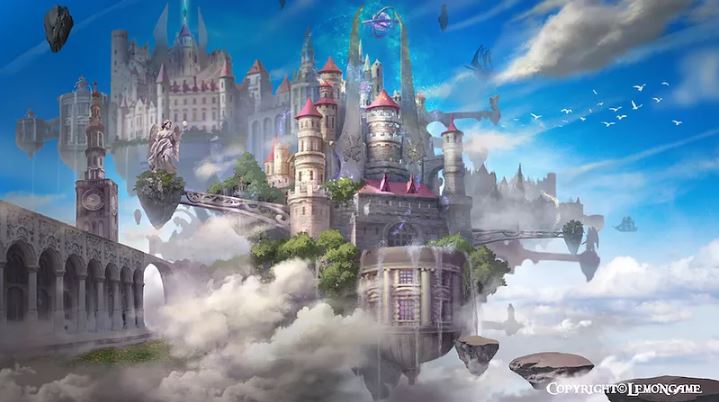
"Magic City," painted by WeiChen Studio (Wei Chang & Pearl)
Q: Wei and Pearl, how would you advise people to learn painting step by step?
A: Wei Chang: Let's assume the learner is starting from zero. Begin by building traditional foundations — sketching, acrylics, oils. Studying these traditional approaches is, I believe, essential groundwork. You may not use them directly later, but the basic steps — stroke technique, color mixing, hand-eye coordination — all transfer to the computer.
Wei Chang: I have to mention something else. When I later worked on commissions, it was a different world. The aesthetics the market wants differ from what school taught. School teaches objective study — color, the behavior of light — but the market has its own demands for character design and commercial considerations. For example, how to paint a woman's hand so beautifully that you want to hold it — that departs from strict reality.
Wei Chang: So the second stage is learning commercially demanded aesthetics, and producing work that meets commercial needs rather than merely realism. Some people observe their own work keenly, but must also study what clients commercially need, and what makes more people like their work.
Wei Chang: Think about how to make more people love your work. Painting only for yourself isn't wrong, but success comes easier when solid art fundamentals and commercial application ability go together. Once both are sufficient, then we can talk about the rest. What many people lack isn't painting ability — it's everything else: correctly hearing and reading a client's needs, understanding what they want in a given project, communicating effectively about what will be delivered, correctly understanding requested revisions, or guiding the client. Commissions aren't one-way listening; they're two-way communication. Helping a client express precisely what they mean and guiding the conversation — I think that's crucial. For some people, sixty or seventy percent of what they lack lies outside drawing: finding a shared language with the client and matching each other's frequency. Sometimes what a client says and what they want are two different things.
Pearl: One past example: a client said he wanted a thick-paint style like a certain game. Only after seeing the in-game sample images did we discover he wanted a Japanese cel-shaded anime style.
Wei Chang: Since then, we ask clients to provide sample images of the style they want directly — it's faster and avoids the communication gap that comes from clients not being specialists. That client at one point refused to provide in-game samples, saying that judging style was part of testing an outsourced artist's ability.
Pearl: We eventually persuaded him to give us samples, and from the next day on, every image we delivered met his needs.
Wei Chang: Some students want to learn the general rules of drawing — skeletons, perspective. These have real principles behind them, but they shouldn't always be memorized like formulas. Observation matters just as much. Many beginners chase shortcuts and skip observation, memorizing rules without understanding why our predecessors distilled them. I believe you should combine the rules with your own observed experience.
Wei Chang: Two key suggestions for learners. First: even when no one around you can teach what you want to learn, know how to dig treasure out of your environment. Second: aim your direction precisely. If you want to do game art but your angle is off, you can't concentrate your firepower in the right direction.
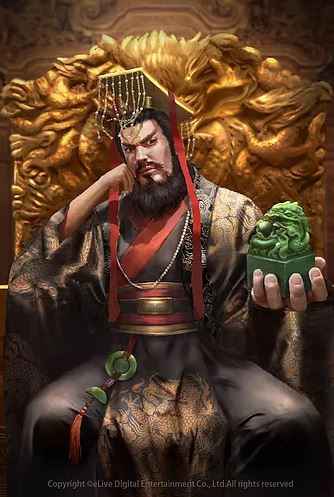
"Legend of the Warring States" — Qin Shi Huang and the Imperial Seal, eLai Digital Entertainment
Painted by WeiChen Studio (Wei Chang & Pearl)
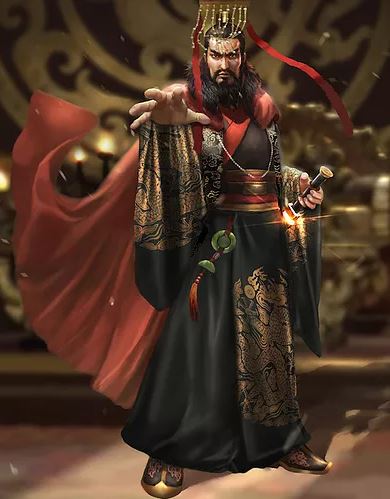
"Legend of the Warring States" — Qin Shi Huang standing pose, eLai Digital Entertainment
Painted by WeiChen Studio (Wei Chang & Pearl)
Q: Wei, you have many years of teaching experience — could you share some advice for those still learning?
A: Wei Chang: While teaching, I saw students learn only what they liked and reject styles they weren't good at, such as realistic impasto. I think that's dangerous. When you take commissions, you find clients' style needs vary enormously, and to take on more projects you learn to widen your stylistic range in order to survive.
Wei Chang: Sometimes, when painting in a single style, you hit conceptual walls that only crack when you attempt styles outside your comfort zone. Maybe it isn't what you want to learn or where you want to develop, and maybe you consider "painting to match" or "copying studies" vulgar. But if you can do a faithful study even once — just once — and prove you're capable of that level, it's never too late to develop your personal style afterward.
Wei Chang: "Can't do it" and "don't want to do it" are two different things. Refusing to learn before you've proven you "can" is simply a loss.
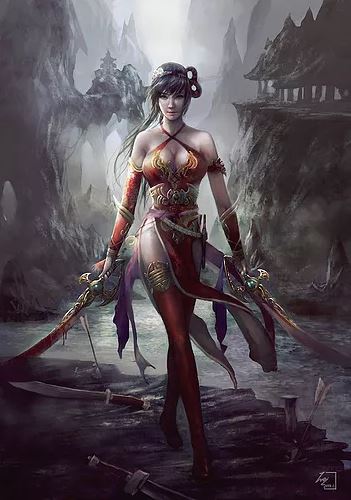
"Female Assassin," painted by WeiChen Studio (Wei Chang & Pearl)
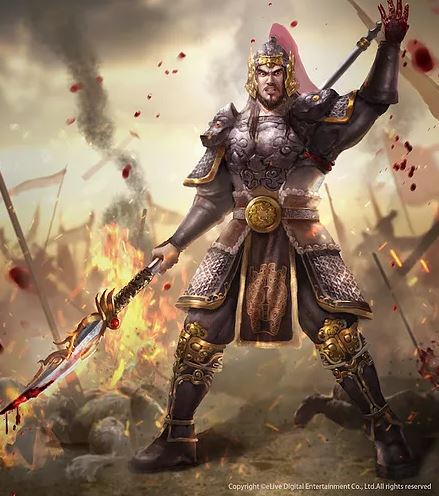
"Legend of the Warring States" — Bai Qi, God of Slaughter, eLai Digital Entertainment
Painted by WeiChen Studio (Wei Chang & Pearl)
Q: Now a question for Pearl — could you introduce your own background?
A: Pearl: My focus is visual communication design. I attended Mingdao's commercial art program in Taichung for high school, then came to Taipei for the visual communication program at Jinwen, and later transferred into fashion design at Shih Chien University.
Pearl: I take commissions myself too — mostly graphic design and small illustrations, sourced mainly through friends and referrals. I've done some textbook illustrations as well, but I don't promote my own work; I mainly promote Wei's. After all, it would look odd for WeiChen Studio to display works in wildly different styles.
Pearl: I hope that when WeiChen Studio matures further, we can happily do the things we want to do. We're planning some new ideas now and hope to show everyone soon.
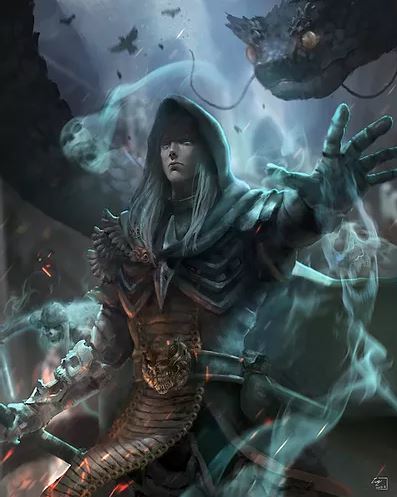
"The Return of Rathma" (Diablo art contest winning work)
Painted by WeiChen Studio (Wei Chang & Pearl)

"Berserker Ganesha"
Painted by WeiChen Studio (Wei Chang & Pearl)
Q: What's the difference between running WeiChen Studio as freelancers and working at a company?
A: Wei Chang: We've worked at companies for years and freelanced for years, and our deepest realization is: "Freelance isn't free — you worry when you have projects, and you worry when you don't." When WeiChen Studio has work, we fear we can't finish or won't do it well. When there's no work, we worry about income. So on the surface it's called freelancing, but it doesn't feel free at all — it's as if we're shackled by the word "free"! (laughs)
(Editor's note: these tears of experience are offered for reference to anyone dreaming of going SOHO)
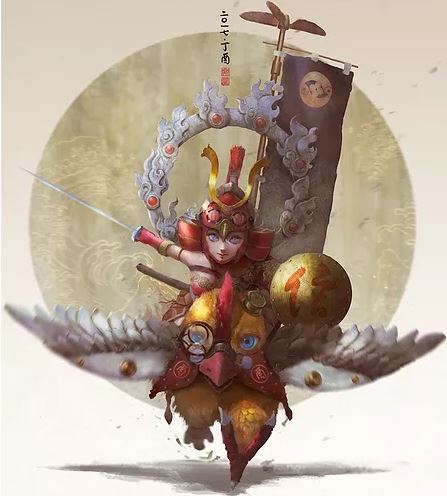
"2017 · Year of the Rooster · Knight of Miracles" 《神蹟騎士》
Painted by WeiChen Studio (Wei Chang & Pearl)
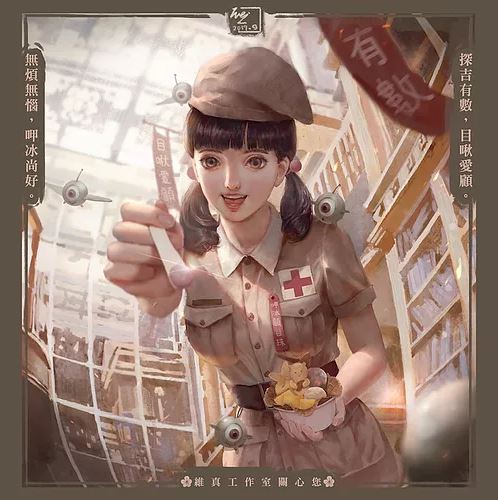
"Miyahara Eye Clinic"
Painted by WeiChen Studio (Wei Chang & Pearl)
Q: Could you both share commission experiences worth passing on to fellow freelancers?
A: Wei Chang: Sure — lessons from working with companies. First case: learning production pipelines. One image commissioned to us should, by rights, have been quick to finish, but the first collaboration stretched to two weeks; all subsequent images were rushed out within two weeks each. Only through the painting process did we learn how the company's pipeline actually ran. After satisfying one or two game companies on quality, word of mouth seemed to build, and in the past year or two clients have come to us on their own.
Wei Chang: Second case: needs that weren't clarified, preventing fast completion. For example, one request was to paint a character raising a glass. The communication breakdown: only after I finished did they say it needed to be raised "elegantly." So we pondered what counts as an elegant toast, and after rounds of confirmation learned that, to them, elegance meant holding the stem of the wine glass. When a client can't state concretely what to make and describes only in vague, abstract adjectives, we now ask for examples — what kind of toast counts as elegant. Sometimes you meet an emotionally expressive client who wants a scene with a "creepy" feeling — but everyone understands creepy differently, so hitting the mark is hard. Some directors speak very impressionistically; seasoned ones provide reference material directly. Impressionistic, abstract talk is fine, but there must be concrete describable content to work from — if the abstract portion reaches sixty or seventy percent, it becomes nearly impossible to execute.
Pearl: We also want to thank the "Game Art Design Outsourcing" group, because we've received many projects there and feel deeply grateful. Before joining, in the first months of independent freelancing, we didn't know how to expand. The hard part was that without game company work experience, pushing the studio's brand outward was genuinely difficult — you have to strike out very proactively.
Pearl: Also, during projects, clients sometimes don't understand specs, styles, or market rates, so we guide them to provide sufficient information; and in communication, respond in a soft but firm way — keeping the peace as much as possible (heh).
Wei Chang adds: We once met someone who tried to drive down the outsourcing price by belittling the quality of our work, so we asked them to show us finished work they considered high quality — and having seen it, we found no higher value in it. That client never came back. The episode also made me reflect on whether I'm too easily provoked, too sensitive — thinking about how to phrase things more tactfully, and realizing my usual way of handling things isn't polished enough.
Wei Chang: Finally, a lesson in mindset: on some projects you do things you don't enjoy, yet you still learn a great deal. Whatever the project, God always has homework in it for us to overcome.
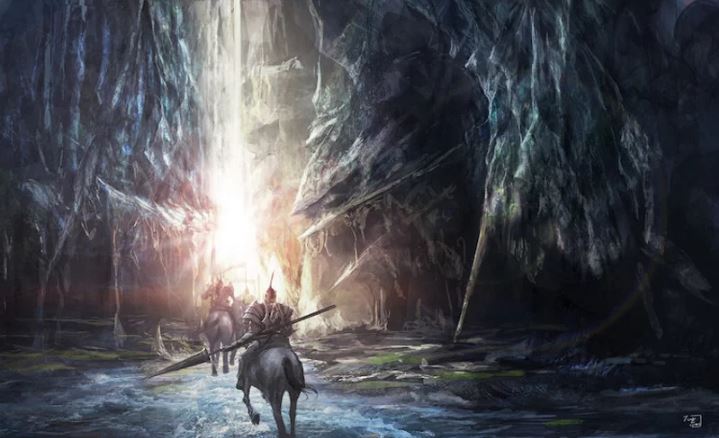
"March to War"
Though I walk through the valley of the shadow of death, I will fear no evil,
for you are with me; your rod and your staff, they comfort me
Painted by WeiChen Studio (Wei Chang & Pearl)
Q: Have you ever run into anything unpleasant while freelancing — scams, for instance?
A: Wei Chang: Yes. In our case, the client wanted a character for about ten thousand NT, which we reluctantly accepted. Only later did we learn it was one character with two poses — it felt like being squeezed.
Pearl: Wei was about to just paint it, but I called the client to say this needed revising, and since the contract hadn't arrived, we couldn't take the job. The client then threatened us, claiming a verbal contract already existed, that we had to paint it or be sued. When the contract finally arrived, the company name and tax ID belonged to different companies, with a very strange excuse; the seal was a personal name seal, no corporate seals, no fold-crossing seals — and they claimed to be "a special kind of company." We could only reply that we couldn't sign and they should find another studio.
Wei Chang: Thank goodness Pearl screens these things, or I might have been fooled outright.
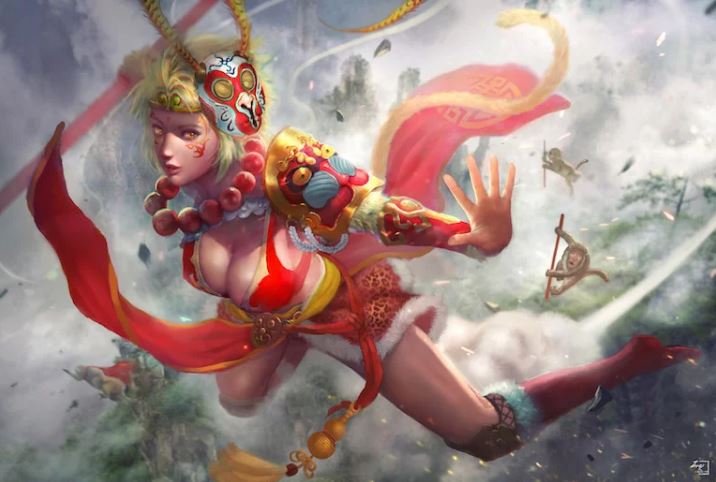
"The Great Sage, Heaven's Equal"
Painted by WeiChen Studio (Wei Chang & Pearl)
Q: How did you two meet? Did Wei win Pearl over?
A: Pearl: I'd studied design but not digital painting, so after graduating I went to a computer school in Taichung to learn it — and met Wei in class. Later we discovered we had both painted the same theme on the same day. What a coincidence.
Wei Chang: I was about 28 or 29 then. When I first met Pearl, all I thought was: this lady is so beautiful, I'm not worthy — she'd never end up with someone like me.
Wei Chang: What actually brought us together was an incident. Once, Pearl was being harassed by a man, and I couldn't stand by, so I stepped in to help. Without that, I probably never would have had the chance to date her. I believe it was God's arrangement.
Wei Chang, with a bonus confession: "Honestly, my thought in the moment was — it's already noon, I'm starving, let me settle this harassment business quickly so I can go buy a lunchbox." (laughs)

"Halloween Little Witch"
Painted by WeiChen Studio (Wei Chang & Pearl)
"OUCH"
Painted by WeiChen Studio (Wei Chang & Pearl)
Q: How do you two cooperate and divide the work?
A: Pearl: Unless there's a huge volume of work, he doesn't need help with the painting — and if I do help, it's mostly rough sketches. Wei usually solves things at lightning speed: the moment I ask whether he needs help, he instantly speeds up and rushes it done himself. (laughs)
Wei Chang: Let me explain... sometimes she wants to help with something, but I haven't yet figured out how she would do it, so I just hurry and finish it myself....
Pearl: Beyond that, I started by helping with publicity, advertising, and marketing, because Wei is too shy for that kind of thing.
Wei Chang: I'm embarrassed to sing my own praises — the work should speak for itself. But that's not how marketing works; you still have to package things well and push them out.
Pearl: At first Wei wouldn't do any of it, but I told him, "maybe all it takes is reaching out — they'll want you." Several times we proactively sent work to publishers, and every time some publisher wanted to publish it. So Wei's work truly has the level; he was just too shy to market it, and only gradually built confidence. My own first outsourcing job came from a student's parent commissioning an illustration. At the time I just drew for fun and wasn't freelancing, yet I dared take the job because I believed I could do it — while he lacked that confidence.
Pearl: That reminds me of the story of Wei's first competition. One year on my birthday, Wei asked what gift I wanted, and I said the best gift would be him entering a certain competition. He entered a competition for the first time — and won.
Wei Chang: I'd never won anything since childhood; I always felt I couldn't, that I wasn't qualified, or I cared too much about results. And some competitions carry other factors, like judges' preferences. Hearing Pearl's birthday wish, I could only grit my teeth and enter — thankfully, that one brought home an award. I'm a person of little faith, after all~ Come to think of it, my wife is my own personal motivator~
Pearl: So beyond advertising, marketing, publicity, motivation, and contracts — I suppose I'm something like an artist's agent.
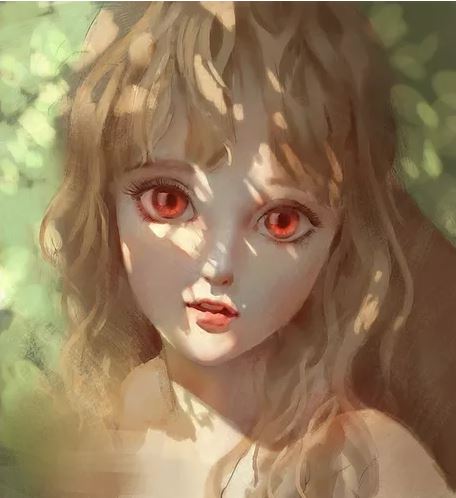
"Miss Dodo"
Painted by WeiChen Studio (Wei Chang & Pearl)
Q: Wei, have you hit any walls in your creative work?
A: Wei Chang: As our painting developed, WeiChen Studio received some negative criticism from internet users. Colleagues sometimes have solid resistance to such criticism, but at first I really wasn't used to it — some days it affected me for days on end. Not every opinion is usable; early on our filtering was weak, but gradually we learned which opinions to accept and which to ignore.
Wei Chang: Also, early on, creating was easily swayed by negative emotions. That improved after WeiChen Studio moved to Taipei — the faster pace of life is actually good for people like us. I tell myself I don't have that much idle time to burn; I need to keep moving. So coming to Taipei was a good thing. Had we kept the old mindset and rhythm, we might still be grieving over overly emotional comments.

"Polar Bird"
Painted by WeiChen Studio (Wei Chang & Pearl)
Q: What mindset advice would you both share with new artists entering the field?
A: Pearl: Complain less, be thankful more. In the beginning, everyone hits plenty of setbacks, but if you keep complaining through them you can't move forward — you only beat yourself down. Better to look for the good in things; maybe those failures can make you better.
Wei Chang: I understand why Pearl says this. There's a trend now — like all the anonymous rant pages on Facebook. We all carry some negativity that needs clearing out, but that stuff easily blurs your focus: we treat the frustration in front of us as life's most important focal point, and it becomes the very thing blocking our progress. Some people envy others — "why is your image so popular and mine isn't?" The healthier mindset is figuring out how to improve yourself, not pulling others down or venting your grievances. When we once lost out because of a contract, we took it as God pruning us, teaching us to learn the lesson. I complain too, and feel wronged sometimes, but I've chosen to just talk it over with the people close to me. I choose not to amplify or dramatize that negativity for the world, because negativity is like inflating a balloon — it swells and swells until it bursts, and the blast comes right back at you, leaving you feeling even worse.
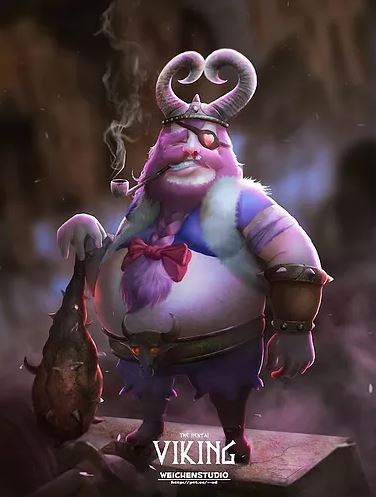
"VIKING"
Painted by WeiChen Studio (Wei Chang & Pearl)
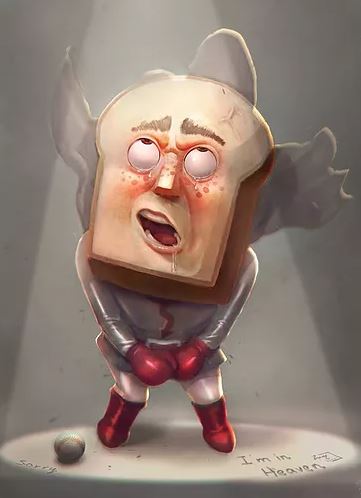
"Toast-and-Egg Man"
Painted by WeiChen Studio (Wei Chang & Pearl)
Closing
Q: Finally, for more experienced artists, could you share insights from your growth along the way?
A: Wei Chang: First: for an artist, personal branding should stay focused on making the work itself better. Since Facebook arrived, artists run fan pages to build personal brands, but it's easy to lose focus — putting the emphasis on attracting more eyeballs, more buzz, more likes, instead of on painting better. So choose your path carefully and develop your style well; ideally, clients come to you not just for your technique, but for your technique and your style.
Wei Chang: Second: once the craft problems are solved, much of what remains to learn lies outside drawing — marketing, and how to sign contracts that protect your rights. During projects, some freelancers complain about clients, and things do come up that need digesting. But much unnecessary conflict can be cleared away in the preparation stage. That means learning how contracts are drawn up, how to spell out the rules of the game clearly within them, and how to market yourself — matters beyond the canvas. These you must manage well yourself: if you only handle the painting but lack these logistics skills, a personal brand can never get off the ground. I've seen quite a few students and artists with real potential fail to rise in the end — and their problem was never the painting. It was everything outside it that they didn't handle well.
Before we knew it, this Migema editor had spent a delightful interview with the humble and kind Wei Chang and Pearl!
Many thanks to WeiChen Studio's Wei Chang and Pearl for accepting Migema's interview!
Notes:
- WeiChen Studio's Plurk: https://www.plurk.com/weichenstudio
- WeiChen Studio's Twitter: https://twitter.com/weichenstudio
- WeiChen Studio's Photoshop Digital Painting Techniques - Western-Style Character Design: https://www.youtube.com/watch?v=ULQJJ3EKTCk
- WeiChen Studio's CG SOCIETY: https://weichenstudio.cgsociety.org/
- WeiChen Studio's Vovo2000: https://vovo2000.com/artist/monet8915018
- WeiChen Studio's DeviantArt: https://www.deviantart.com/weichenstudio
- WeiChen Studio's digital painting course: https://www.tibame.com/course/402
- WeiChen Studio's digital painting course: Corel Painter Grayscale Character Painting | Draw Dynamic Character Illustrations

"Twilight Dance"
Painted by WeiChen Studio (Wei Chang & Pearl)
Copyright Notice
All image copyrights belong to their respective companies and rights holders.
Article reprinted from: Migema: Game Art Hall of Fame — An Interview with Leading Illustration Team WeiChen Studio!