
Distinctive Creature
Character Design
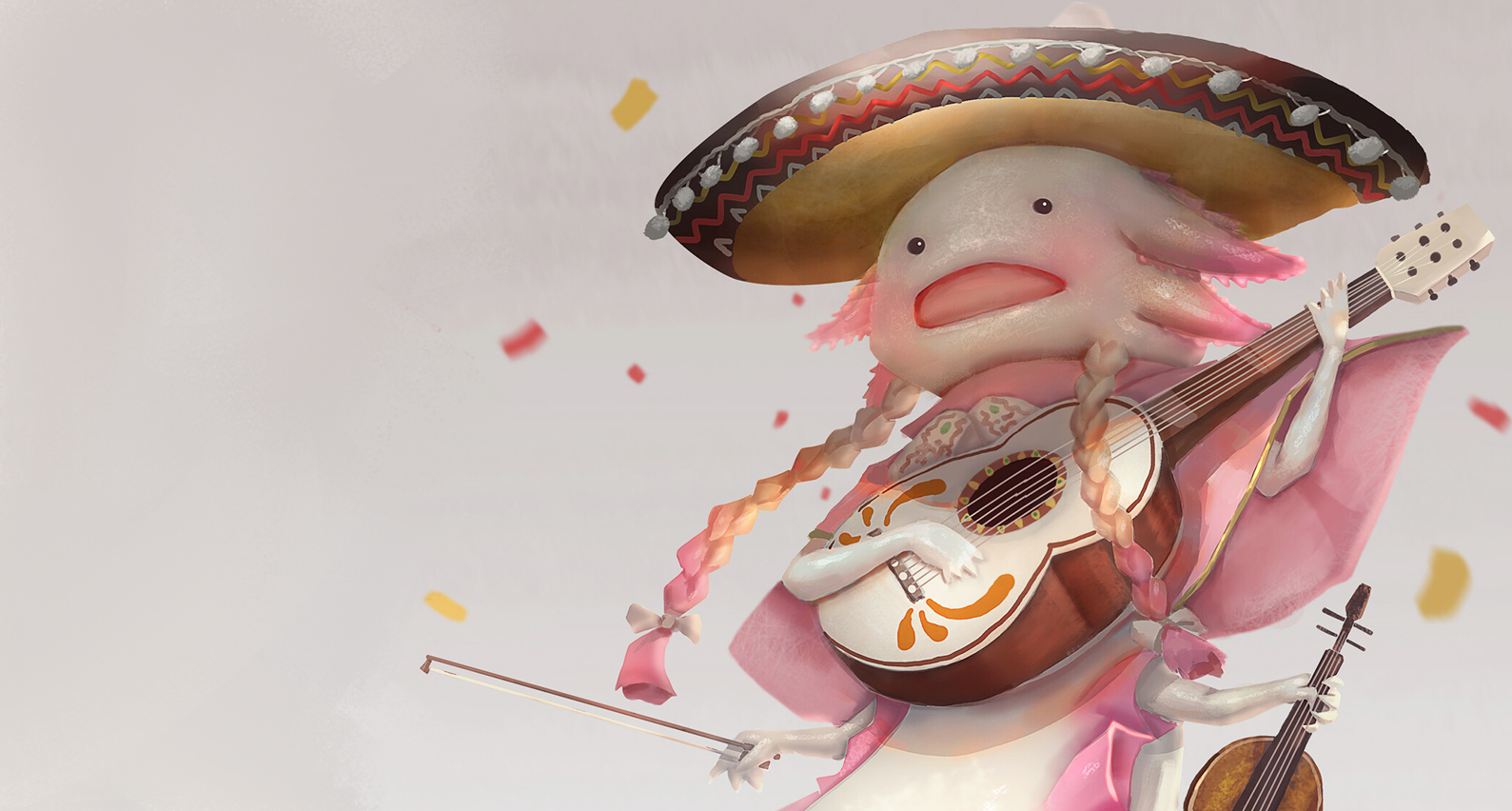
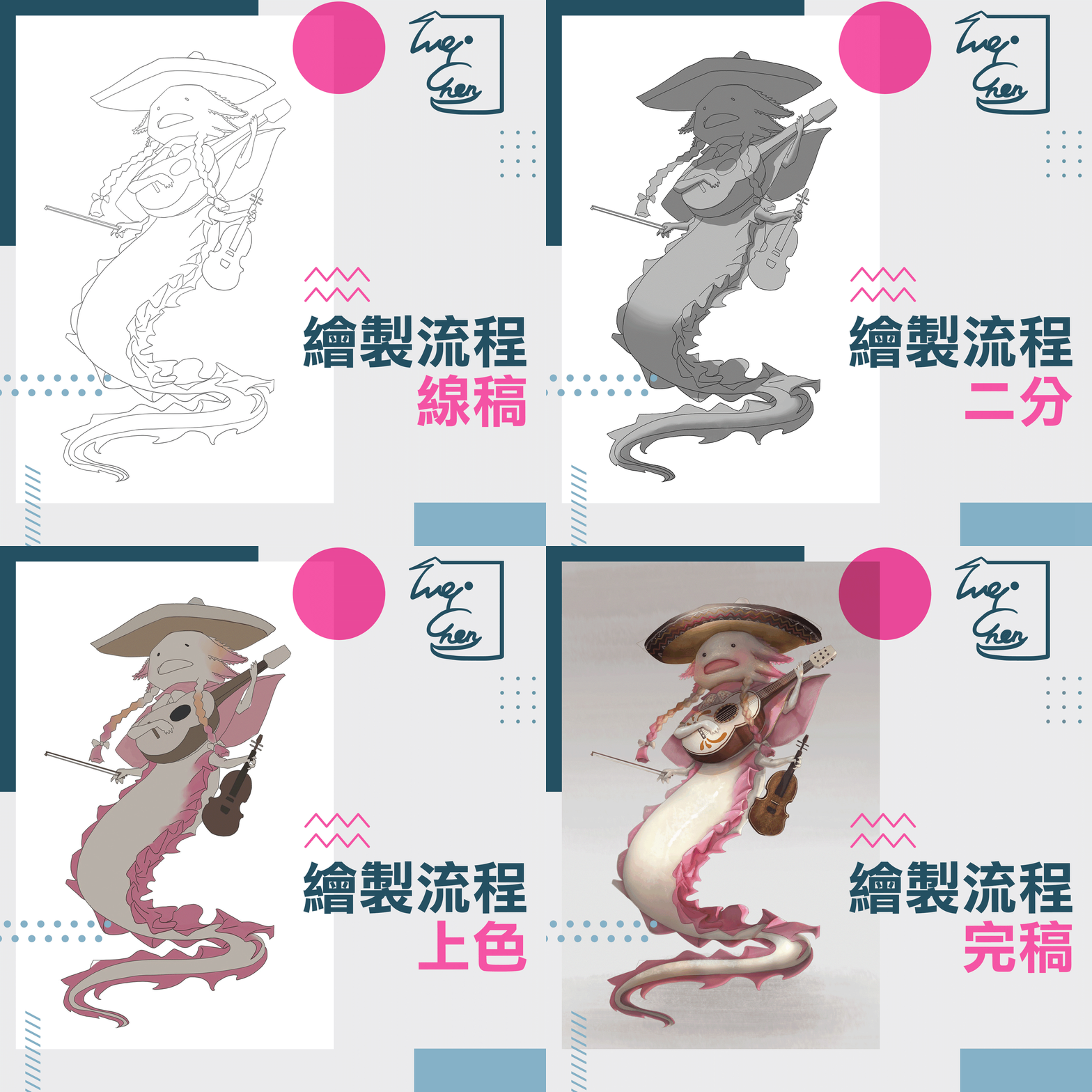
Want to bring light and shadow into your work, but your grayscale-to-color always ends up muddy? This course uses the AO technique to split light, shadow, and color into separate layers—each interpreted on its own, then reintegrated into the final image. Using the award-winning "Axolotl Wandering Band" as the example, you'll create creature characters with real personality.
Pay by credit card (installments available), Web ATM, or at a convenience store. If you choose convenience-store payment, you'll get a payment code or slip first; the course unlocks once it's paid.
- Pay once, watch the course videos forever
- AO technique: split light, shadow, and color into layers—goodbye muddy tones
- Includes "Axolotl" layered demo files and brush set
- Exclusive Discord group for paying students
- 2 live Q&A meetup and livestream sessions
Four AO Steps to Characters with Personality
The AO technique splits light, shadow, and color into separate layers to handle individually, then reintegrates them—making color adjustments fast and clean from now on.
Concept
Efficiently pull together the character concept in your head and your reference gathering, saving time on both personal work and client communication.
Line Art
The scaffolding of your piece. Build the logic and mindset behind line art so you can break down and simplify any problem you face.
Light & Shadow
Break down and interpret light and shadow one step at a time; get the lighting right and the drama and tension of the image emerge.
Color
Starting from how pigments blend on paper and canvas, integrate light, shadow, and color, then refine form with impasto.
"I want to add light and shadow to my work, but every time I go from grayscale to color, it just gets muddier and muddier."
- ✕You don't know how to think about form and personality when designing a character
- ✕You want to light your scene for drama, but have no idea where to start
- ✕Grayscale-to-color turns muddy and murky the moment you add color—how do you fix it?
Character design and coloring are the two things students are most curious about—and where they get stuck most often. No direction in design, no sense of how to light, muddy color the instant you paint—these pain points usually come from the habit of handling light, shadow, and color all at once.
This course uses the AO technique to split light, shadow, and color into separate layers, each interpreted on its own, then reintegrated at the end. It's a great entry point for developing your grasp of layers, lighting, and color—and in real client work, it makes adjustments during the coloring stage fast and easy.
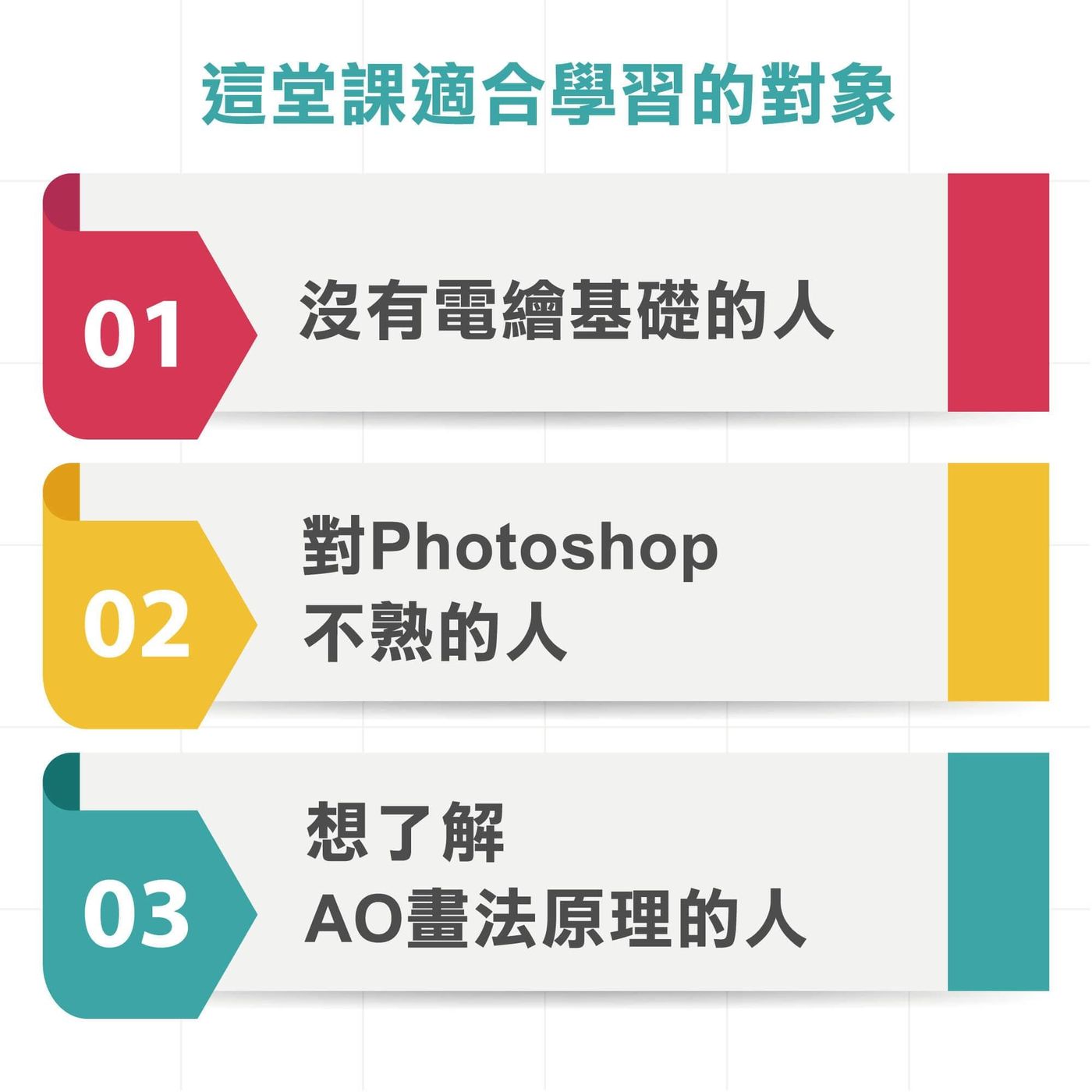
This Course Is a Great Fit If You…
Ideal if you already know basic Photoshop and want to move from beginner to intermediate artist.
Love creating OCs and
want characters with personality
Have digital painting basics
but get stuck on color and lighting
Want to learn grayscale-to-color
but fear muddy tones
Course Syllabus
Eight chapters, thirty videos—from concept all the way to impasto refinement.
CH 00Before You Begin
Warm-up and course materials
Before the real start, get your handouts, outline, and key notes ready, and download the "Axolotl" demo files and brush set. Includes a "Sphere & Egg" impasto warm-up to build your sense of form before diving in.
- 0-1Important! Pre-course notes and outline
- 0-2Common Photoshop shortcuts
- 0-3Axolotl demo files and brush set
- 0-4Impasto basics: Sphere & Egg

CH 01How to Brainstorm Efficiently
Pull the ideas in your head together
Many people love creating OCs but lose a lot of time because they can't efficiently pull their concepts together. This chapter shows you how to consolidate your pre-creation ideas and reference gathering, making personal work—and future client communication—far more efficient.
- 1-1How to brainstorm efficiently
- 1-2Consolidating concepts and gathering references
- 1-3Communicating more effectively with clients
CH 02Photoshop Fundamentals Review
Get comfortable with layers before coloring
The first step to mastering the AO technique is being comfortable with software layers. This chapter gives you a quick, complete breakdown of Adobe Photoshop—a must-learn tool in both animation and games—so you have a solid understanding before entering the painting workflow.
- 2-1Full breakdown of the Photoshop interface and layers
- 2-2Layer operations the AO technique needs

CH 03The Essential Scaffolding: Line Art
The foundation for breaking down problems
No matter the subject, line art is a foundation you can never skip. This chapter analyzes the logic and mindset behind drawing line art; once you're comfortable with it, you'll be able to break down and simplify any painting problem you encounter.
- 3-1The essential scaffolding: line art
- 3-2The logic and mindset of drawing line art
CH 04Key Concepts to Know Before Coloring
Build your understanding of light first
Coloring means tackling multiple problems at once, and juggling light, shadow, and color together is no easy task. This chapter first breaks down and explains how light and shadow are constructed, building a solid understanding before you move into the hands-on AO application.
- 4-1Key concepts to know before coloring
- 4-2Basic concepts of separating light and shadow
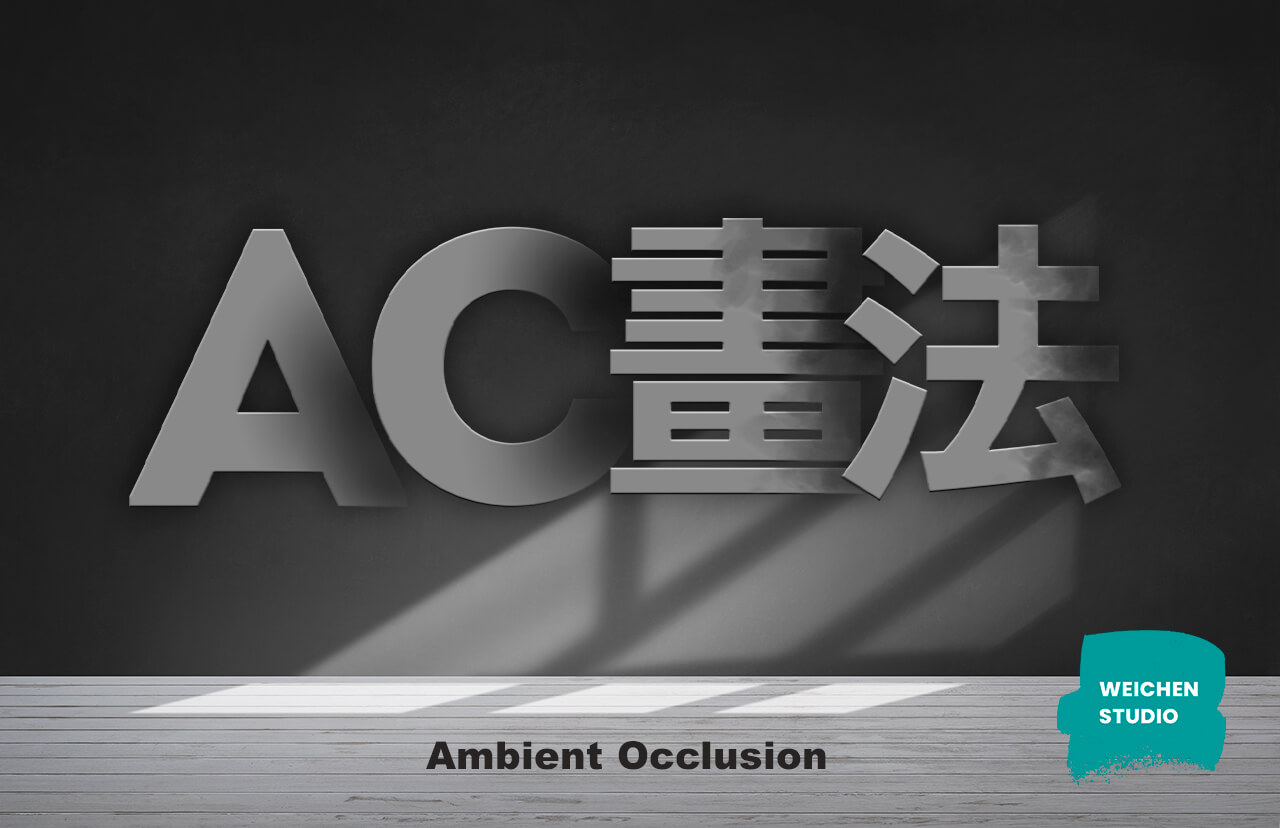
CH 05Analyzing Light, Shadow, and Color
The heart of the AO technique
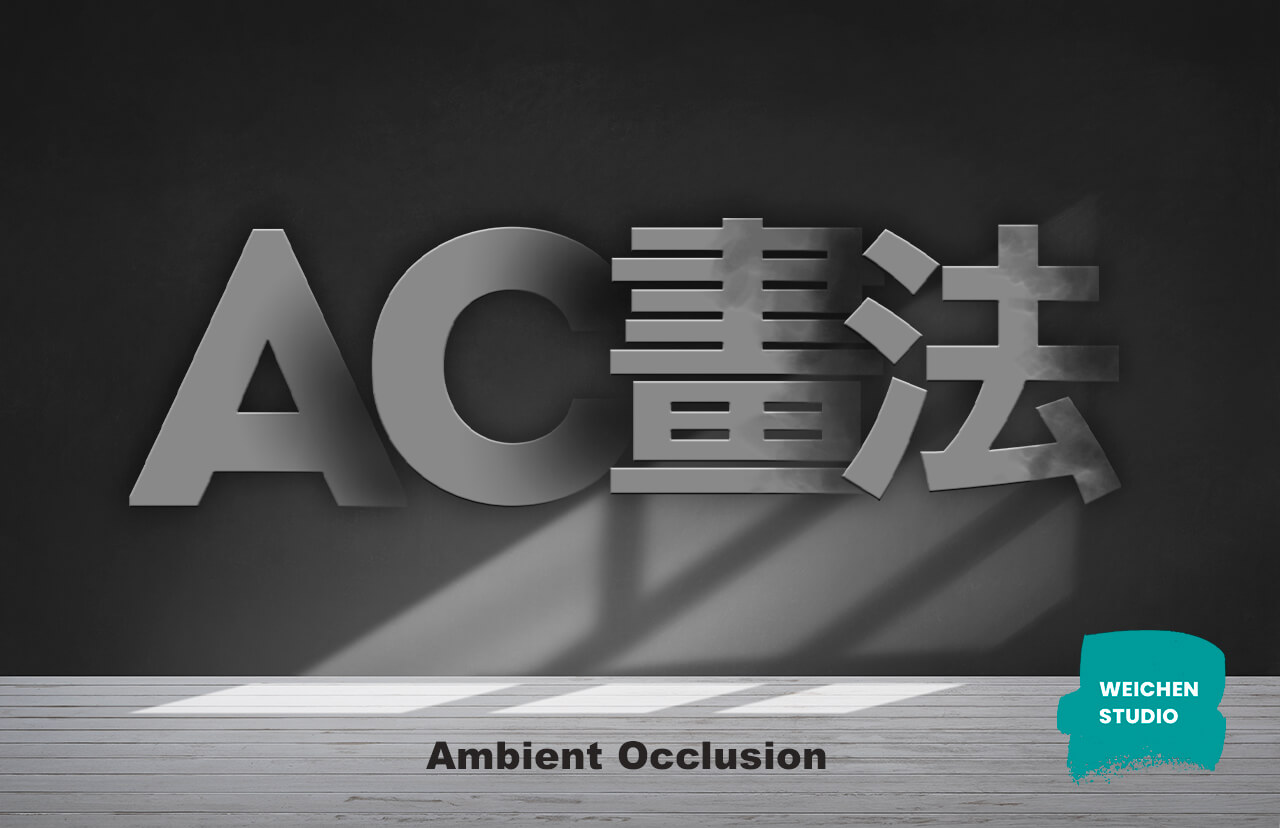
The AO technique thinks about light, shadow, and color separately. This chapter dives deep into how light and shadow are built—separating light and shadow, splitting them from color, adding occlusion shadows, and finally summing up the color. Taking the elements apart and beautifully recombining them is what this chapter is all about.
- 5-1Separating light and shadow
- 5-2Splitting light, shadow, and color
- 5-3Adding occlusion shadows
- 5-4Summing up the color
CH 06The Basics of Impasto Painting
Give your character more solidity
On top of the AO foundation, we introduce the basics of impasto painting to give creature characters a more solid sense of form and texture. This chapter explains the core impasto concepts, bridging into the later work on form-building and refinement.
- 6-1Explaining the basics of impasto painting
- 6-2Connecting impasto with AO
CH 07Building Form and Final Refinement
The finishing touches
In the final stage, you'll strengthen direct light and explore ambient light—the key player in unifying color—to paint smooth, natural skin tones and texture, plus notes on drawing accessories. Finish the assignment and take your work's polish to the next level.
- 7-1Building form: strengthening direct light
- 7-2Explaining the concept of ambient light
- 7-3Painting smooth skin tones and texture
- 7-4Accessory notes and assignment walkthrough
Axolotl Demo Files × Brush Set
The complete layered files for the award-winning "Axolotl Wandering Band," plus Wei's own custom brush set, so you can follow every AO step hands-on as you learn.
- Axolotl layered demo file:Full PSD layers, matching every AO step in the course
- Axolotl brush set:The instructor's custom brushes for smoother texture and impasto work
- Sphere & Egg warm-up file:An impasto basics practice file to build your sense of form first
Prerequisites
We suggest starting with this foundation course first — the rest will come much easier:
Procreate Impasto Basics: In-Person Class for BeginnersRecommended firstFinished this course? Here's your next step
Based on the skills you'll have built, this is the smoothest path forward.
Next, place your characters in a scene — that's when the picture feels complete.
Portfolio ready? Learn how to land your first commission.
More Than a Pre-Recorded Course—Ongoing Support
Rewatchable pre-recorded videos, plus live meetups and community, so you're never learning alone.
Lifetime Rewatch
Rewatch the pre-recorded course anytime, anywhere—slow it down, pause whenever, and replay as often as you like.
Occasional Live Meetups
Topic discussions, live painting sessions, and paid-student Q&As—each running about 30 minutes to an hour.
Exclusive Discord Group
A discussion and support group just for paid students, available on phone and desktop—send in your work and get personal feedback from the instructor.
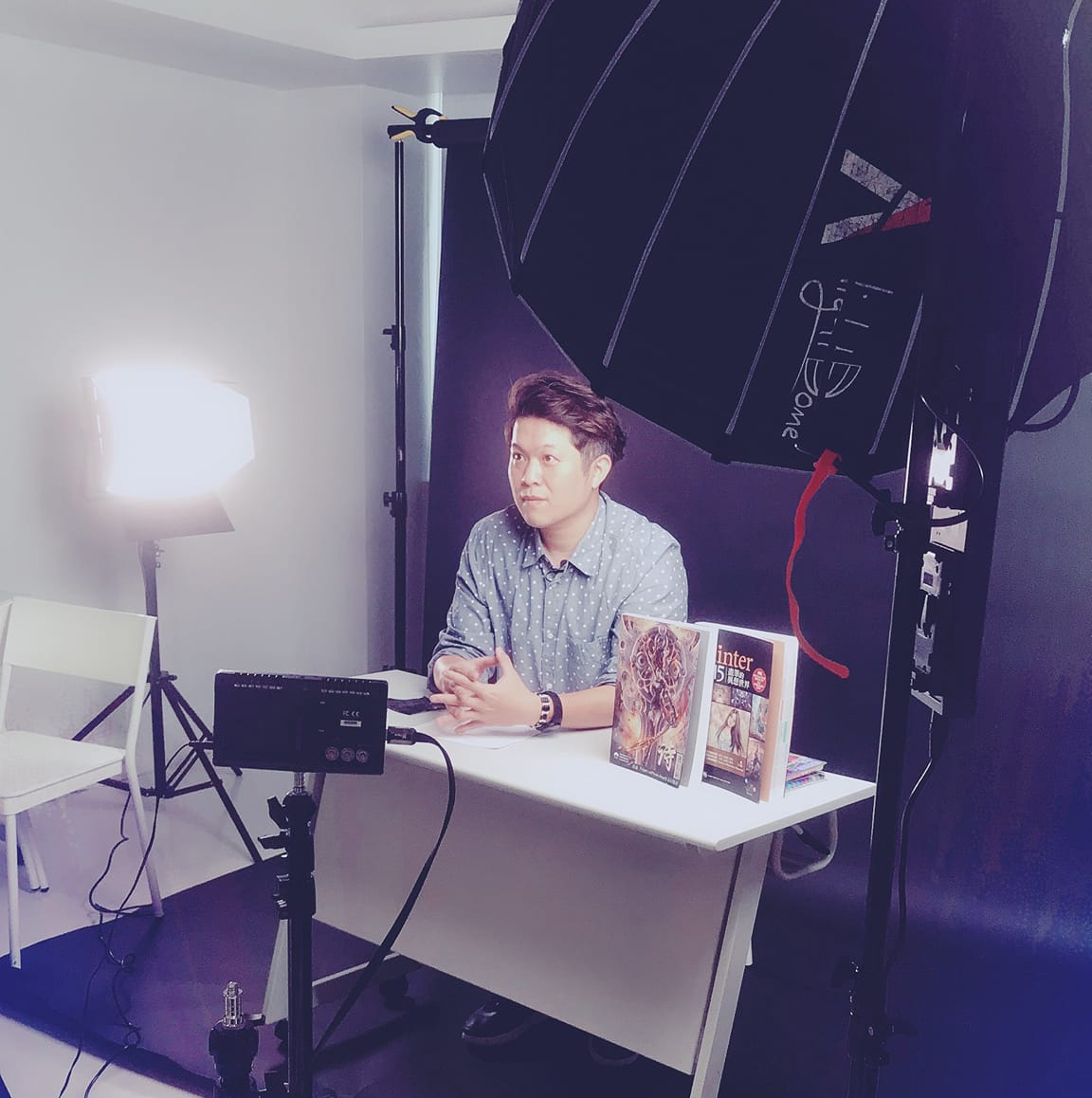
Wei Chang
"Think of light and shadow separately first, and your color will never turn muddy again."
A graduate of the Fine Arts Department at National Changhua University of Education, Wei has taken on commercial commissions since 2007, with over a decade of professional art outsourcing experience spanning film and animation, game characters and scenes, publisher cover and interior illustration, and advertising art. He has taught on the YOTTA and TIBAME online platforms, and has exhibited at Taiwan Comic Festival, Taiwan Original Fair, and the NCUE Fine Arts Department, among others.
FAQ
Can complete beginners take this course?
Yes—complete beginners can take this course. It builds your concepts step by step, from ideation and line art to AO coloring. To follow along more easily, we recommend being comfortable with basic Photoshop operations first.
Do I need special software for this course?
The demos use the Adobe Photoshop CC series; we recommend CS6 or later. If you use other software like Clip Studio or Procreate, we suggest getting familiar with basics such as creating layers, brushes, and image size and resolution before purchasing.
Can I ask the instructor questions during the course?
Of course—ask anytime! We provide an exclusive Discord group and occasional online meetups, where the instructor personally responds and gives feedback on your work.
If I miss a live meetup, can I still catch up?
Every meetup you attended remains rewatchable forever; replays of sessions you didn't attend are collected in the on-site replay library, available to subscribers.
Can overseas students enroll?
Absolutely! The instructor teaches in Chinese. If you need English subtitles, they will be added gradually after the Chinese version is released.
How do the 2 bonus live Q&A meetup sessions work?
This course includes 2 live Q&A meetup sessions — worth NT$798, based on the NT$399/month subscriber plan. Entering a meetup livestream counts as 1 session (re-entering the same meetup is never counted twice). Please use your allowance within one year of purchase. Once your allowance is used up, your course videos remain available forever. Every meetup you attended remains rewatchable forever; replays of sessions you didn't attend are collected in the on-site replay library, available to subscribers.
Distinctive Creature Character Design
- Pay once, watch the course videos forever
- AO technique: split light, shadow, and color into layers—goodbye muddy tones
- Includes the Axolotl layered demo files and brush set
- Exclusive Discord group for paying students
- 2 live Q&A meetup and livestream sessions
Pay by credit card (installments available), Web ATM, or at a convenience store. If you choose convenience-store payment, you'll get a payment code or slip first; the course unlocks once it's paid.